![[Translate to English:] Orlando Lasso Musiknoten](/fileadmin/_processed_/a/7/csm_kunst-musik-literatur_2f8fa71bda.jpg)
Art, music and literature
The Academy catalogues and preserves important works of art, as well as collections or even the complete works of major composers and literary figures. The findings from this basic research are made available in publications and databases that can be accessed by researchers or anyone with an interest in art, music or literature.
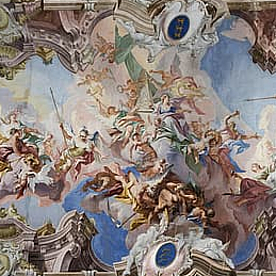
Corpus of Baroque Ceiling Painting in Germany
Ceiling and wall paintings were among the most iconic design elements of baroque interiors. Between 1550 and 1800, castles, churches, ballrooms and libraries were graced with astonishingly diverse and innovative surface paintings. The project studies the 4,000 or so preserved and restorable paintings that have survived in present-day Germany. Innovative digital techniques are used to make the findings available in an online database.

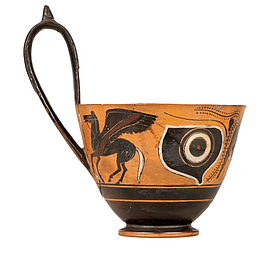
Corpus Vasorum Antiquorum
The shapes, decorations and inscriptions of ancient Greek ceramics are a special kind of historical source, offering a wealth of information on what life was like in the living environments of the time. They provide one of the most important foundations of our knowledge of antiquity, complementing the information acquired from written sources. The international Corpus Vasorum Antiquorum project uses uniform standards to catalogue the painted ancient Greek vases in museums and collections around the world and makes this information available in an online database.
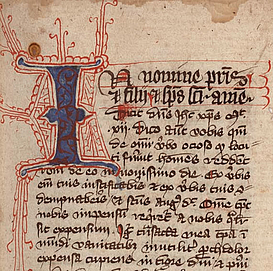
The Austrian Bible Translator
A German-language translation of the Bible was already in existence 200 years before Martin Luther came along. A version with commentaries was created in the 14th century by an anonymous author – known as the “Austrian bible translator” based on the location where most of the manuscripts were found. It is regarded as the most significant bible translation of the Middle Ages. This project is working to produce a commented edition of these works in hybrid form (print and digital).
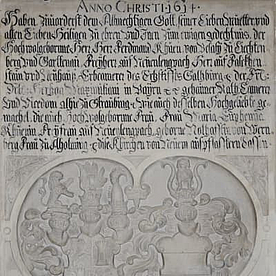
German Inscriptions from the Middle Ages and Early Modern Period
Inscriptions are texts marked on “durable” materials such as stone, wood, metal, textile and glass. They often provide a better record of historical events and figures than other written sources. The project makes inscriptions from Bavaria dating from the Middle Ages and the early modern period accessible in a single edition. The work involves transcribing often only partially legible texts as well as translation, object description, historical classification and commentary.
Franconian Dictionary
The Franconian Dictionary project collects, documents and describes the complete vocabulary of the Franconian dialect in an online database. The work is based on over 100,000 questionnaires dating from 1927 to 2001, which are semantically, grammatically and etymologically analysed by the editorial team.
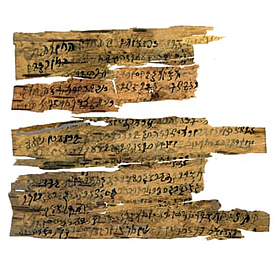
Early Buddhist Manuscripts from Gandhāra
Gandhāra is the former name of the region now located in north-western Pakistan and neighbouring parts of Afghanistan. Its wealth in ancient times came from Silk Road trade and the region played a key role in the transmission of Indian Buddhism to Central and East Asia. The project examines and edits the Buddhist manuscripts discovered in this region since the 1990s.

Writings of John of Damascus
John of Damascus (c. AD 650–750) is known as the “last of the Greek fathers” of both the Eastern and Western Churches. His work encompasses the entire field of Greek theology at the end of its great epoch and provides a dogmatic summary of the Orthodox faith. This project is compiling the first complete critical edition of his works.
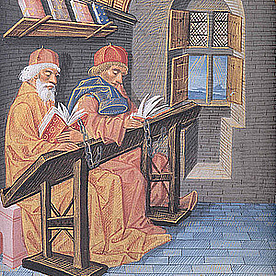
Medieval Library Catalogues of Germany and Switzerland
The fall of the Roman Empire also resulted in the loss of famous libraries from antiquity, such as the one in Alexandria or the Biblioteca Palatina in Rome. Europe had to wait until the Middle Ages for a revival of its book culture, which was centred around its monasteries. The project systematically indexes all library catalogues created in Germany and Switzerland up to around the year 1500, thus enabling further research on the intellectual heritage of the Middle Ages.
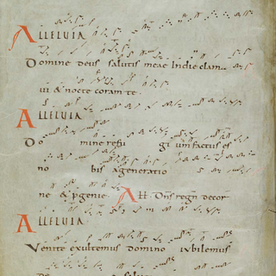
Dictionary of Medieval Latin
The Dictionary of Medieval Latin (MLW) is the largest of the national dictionary projects focusing on medieval Latinity compiled under the aegis of the Union Académique Internationale. It is based on Latin sources that were created between the 6th century and the end of the 13th century in German-speaking regions and have been edited. The archive on which the dictionary is based contains over one million slips of paper excerpted from around 4,000 texts covering all literary genres, technical writing and official documents.
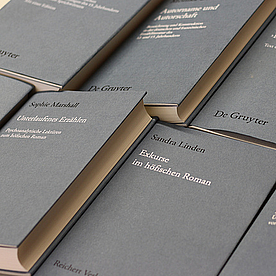
Munich Texts and Studies of German Medieval Literature
The Munich Texts and Studies of German Medieval Literature (MTU) is a highly regarded international series of publications that undertake research into medieval German-language literature, providing scholars with a selection of editorially, methodically and analytically oriented works. As a forum for publications for use in basic research (editions, studies on the history of tradition and texts, standard repertoria), it provides analytical articles concerned with the current discussion of methodology based on examples from studies.

Richard Strauss Edition
The “Critical Edition of the Works of Richard Strauss” project is dedicated to all of the theatrical works, orchestral works, lieder, choral works and chamber music by composer Richard Strauss (1864–1949) and uses the latest historical-critical method. The project gives access to newly orchestrated scores with critical apparatus. As well as being of interest to scholars, this work also gives insight into the artistic processes.
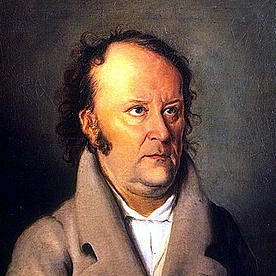
The Historical-critical Jean Paul Edition
Writer Jean Paul (1763–1825) was one of the most important figures in German classicism – and yet his work has not yet been completely catalogued. The “Sprachgitter digital: The Historical-critical Jean Paul Edition” project will cover all parts of his oeuvre from manuscript to printed work and map the interlinking patterns in Jean Paul’s work in an open-access digital publication.
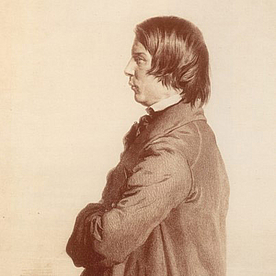
Robert Schumann’s Poetic World
Robert Schumann’s (1810–1856) poetry, writings and musical works are a prime example of 19th-century music and its aesthetics. This project reconstructs this “poetic world” in a historical-critical edition of his writings, poems and vocal compositions and combines basic editorial and philological research with musicology, literary studies and the digital humanities.