![[Translate to English:]](/fileadmin/_processed_/4/2/csm_header-chronik_084bc36802.png "[Translate to English:]")
Timeline
1720
Academia Carola Albertina an early forerunner institution
Bavaria had been keen to join Europe’s academy movement since the start of the 18th century. The Academia Carola Albertina, an early forerunner of the Bavarian Academy of Sciences and Humanities, is founded in 1720, but is not in existence for very long.
1722
Parnassus Boicus an important precursor

Founded in 1722, Parnassus Boicus, or the Bavarian Mountain Muse, is another precursor to the Bavarian Academy of Sciences and Humanities. Its members are learned lay people and clerics, primarily drawn from the Augustinian Canons Regular and the Augustinian Hermits. Their brand of enlightened, secular Catholicism sets the tone for the Bavarian academy movement. The society’s official publication is a journal of the same name, published in five volumes up until 1740. Its aim is to investigate the natural world and promote the study of Bavarian history. The fifth and final volume of “Parnassus Boicus” is published in 1740 due to the outbreak of war. No other institution that could have furthered the idea of critical research into history and the natural world emerges for some time after this. The 1759 founding charter of the Academy refers explicitly to the Parnassus Boicus.
1758
Foundation of the Bavarian Institute of Scholars

To ensure continuity of this new appreciation for the sciences and humanities in Bavaria, the Court Councillor at the Mint and Mines Commission in Munich decided to establish a successor to Parnassus Boicus. Johann Georg von Lori (1723–1787) founds the Bavarian Scholarly Society on 12 October 1758 with the aspiration of elevating the society to the status of an academy dedicated to research and scientific progress and under the aegis of the Elector of Bavaria.
1758
First executive committee of the society
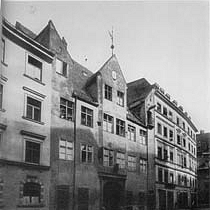
In addition to Johann Georg von Lori, the academy's founding members also included Royal Mint and Mines Councillor Dominicus von Linprun and honorary business councillor Franz Xaver Stubenrauch. Lori drew up a charter that clearly tended towards the structure of an academy.
Sigmund Graf von und zu Haimhausen was the first president of the Bavarian Scholarly Society. He was also head of the Bavarian Mint and Mines Commission (and as such Loris's superior). His good connections to the court gave the society access to the Elector.
1759
Founding charter of the Academy
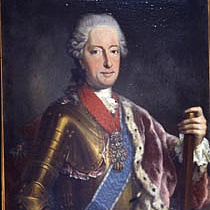
The founding charter of the Bavarian Academy of Sciences and Humanities is signed by Maximilian III Joseph, Elector of Bavaria, on 28 March 1759, the anniversary of his birth. He ratifies the Academy’s statutes on 25 June 1759. The Academy is initially financed by taxes generated by the officially controlled calendar business.
It becomes the first major public scientific institution to be funded by the state ruler in the court city of Munich. At the time, the university is located in Ingolstadt.
1760
Membership without religious limitations

From the very beginning, the Academy chooses not to take religion or nationality into consideration when selecting members. Instead, prospective members have to submit a paper, which must be accepted by the Academy. In the founding year, 19 of the 88 members are of the Protestant faith. This is notable because Protestants are unable to gain citizenship in Munich at that time.
The members are split into two “classes”: Historical and Philosophical (today, there are four Sections). The first class is tasked with collating, collecting and critically reviewing official deeds, letters, inscriptions and antiquities. It is also responsible for researching the history of Bavaria and for compiling dictionaries.
The second class is responsible for researching the natural world, collecting natural history specimens in Germany and abroad and chemically analysing them as well as distributing scientific findings and inventions for the benefit of agriculture, the craft professions, mining and metallurgy.
1760
First permanent home for the Academy
In the early years, the Academy had no fixed address and its members initially meet at Burggasse 5 and later at the home of its President, Sigmund von Haimhausen. It later meets in several rooms near the Court library.
The Academy finds its first permanent home near the Schwabing city gate in 1760. Owned by the Fugger family, the property is located between Theatinerstraße and Faulhaberstraße (what is now the “Fünf Höfe” shopping centre).
1761
Public invitation to observe transit of Venus
On 6 June, the Academy invites guests to witness a very rare event at its observatory located in a part of the city known as the Rockerl (the current site of Bavaria’s highest building authority). This high-profile public demonstration of Venus transiting across the sun brings the Academy’s research activities to the attention of Munich’s wider population for the first time.
1763
First publication of Monumenta Boica
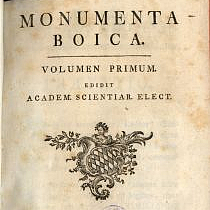
The collection and edition of old Bavarian documents in the “Monumenta Boica” underscore the Academy’s special focus on history and establish Munich as a centre of historical research in Germany. The first volume is published in 1763 and the complete collection encompasses some 100 volumes today.
1783
The Academy moves to the Wilhelminum
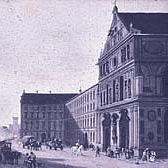
In 1783, the Academy moves to the “Wilhelminum”, the large college building formerly occupied by the Jesuit order on Neuhauser Straße. It would remain here until the Second World War.
1783
Start of systematic weather observations
The Academy started making systematic meteorological observations as far back as 1759. From 1781 onwards, these are continued on the Hoher Peißenberg mountain to the southwest of Munich, and the Academy also begins to publish its results. The Bavarian weather observatory is integrated into the newly founded Reich Weather Service in 1934. Today, it is run by Germany’s national meteorological service. The meteorological records from Hoher Peißenberg are among the oldest and most complete in Europe. They still provide a globally important reference point for weather and climate research.
1785
Translate to English: Schließung der belletristischen Klasse
Translate to English: Unter Kurfürst Karl Theodor wird die 1779 erst gegründete belletristische Klasse wieder geschlossen: Einige ihrer Mitglieder sind verdächtig, dem Illuminatenorden anzugehören, der im selben Jahr verboten wird.
1786
Introduction of ball ballot system

On 21 March, the Academy uses a ball ballot system for the first time for its annual membership election.
This effective system used black and white wooden balls to ensure a secret ballot. Voting members used a white ball to vote yes and a black ball to vote no. The Academy still uses this method to select its members.
1807
Transformation into a central state body
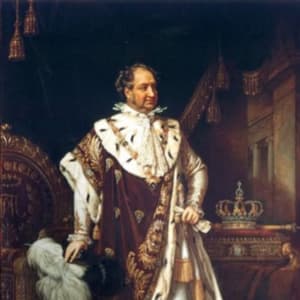
Under the regency of Maximilian I Joseph (1806-1825), the Academy transitions from an independent scholarly institution to a central state body with a new constitution and a staff of full-time civil servants on fixed salaries. It is put under the direct control of the Ministry of the Interior.
1807
Incorporation of the scientific collections
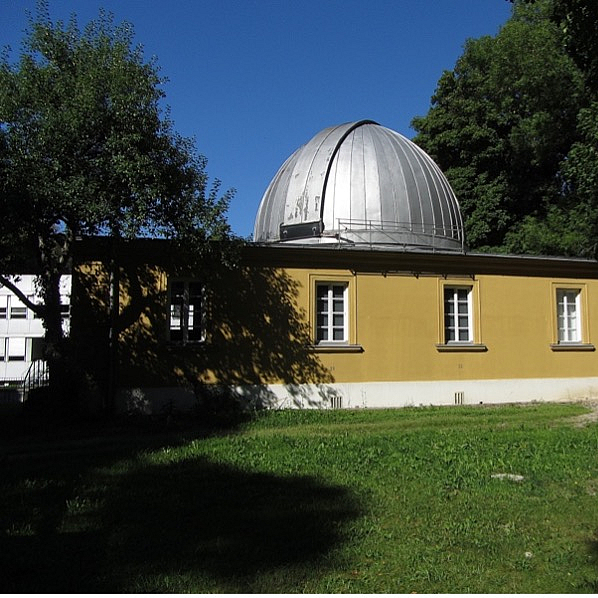
The scientific collections and institutes of the State of Bavaria are incorporated into the Academy as “attributes” in this year. These include the central library, the natural history collection, the chemistry laboratory, the coin cabinet, the antiquarium, the Bogenhausen observatory, the botanical gardens and the anatomical theatre.
1807
Joseph von Baader appointed first curator of the polytechnic collection
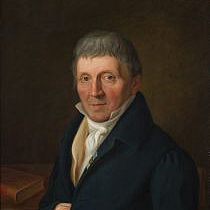
Joseph von Baader is appointed the first curator of the Academy’s polytechnic collection and remains in this post until 1817.
1816
Construction of the Bogenhausen observatory
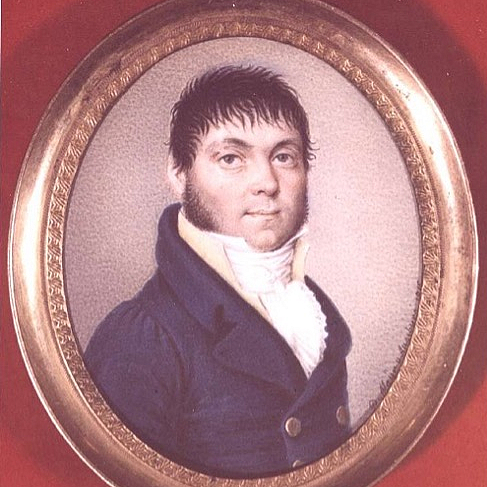
Construction gets underway on the Bogenhausen observatory, which starts operations on 4 January 1818. Johann Georg von Soldner (1776-1833) is its first director.
1816
Inception of the Bavarian Dictionary
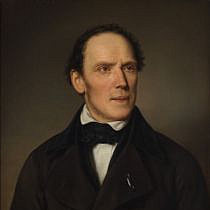
Andreas Schmeller starts work on the Bavarian Dictionary, initiating a research project that is still in progress today. This work also lays the foundation for the first philology-based German-language dictionary.
1817
A golden age for technical innovation
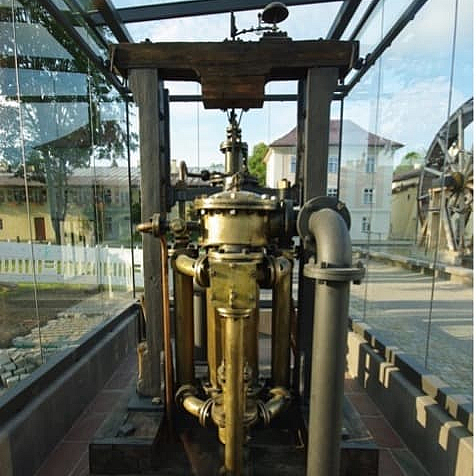
This decade proves to be a mini-golden age for scientific research. Key innovations include the development of high-precision optical instruments by Joseph von Fraunhofer, the water column engine by Georg von Reichenbach and the galvanic telegraph by Samuel Thomas von Soemmerring.
1817
Expedition to Brazil by Spix and Martius
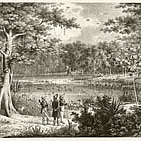
Academy members Johann Baptist Spix and Karl Friedrich von Martius set off on a research expedition to Brazil. They return in 1820 with a large collection of plants for the botanical gardens in Munich.
1819
Works begins on Monumenta Germaniae Historica
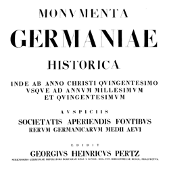
The major source edition for the German Middle Ages, the Monumenta Germaniae Historica (MGH), is launched by the Society for the Study of Early German History. Under the direction of historian Georg Heinrich Pertz (1795-1876), this work plays a key role in bringing German medieval studies to the international stage.
1826
Relocation of Bavarian state university to Munich
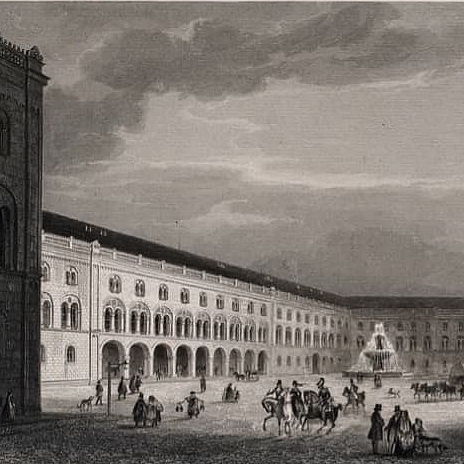
In 1826, the Bavarian state university moves from Landshut to Munich. The Academy now has access to a much wider pool of scholars than at its foundation. Its academic endeavours become increasingly professional as a result.
1827
Return to independent community of scholars
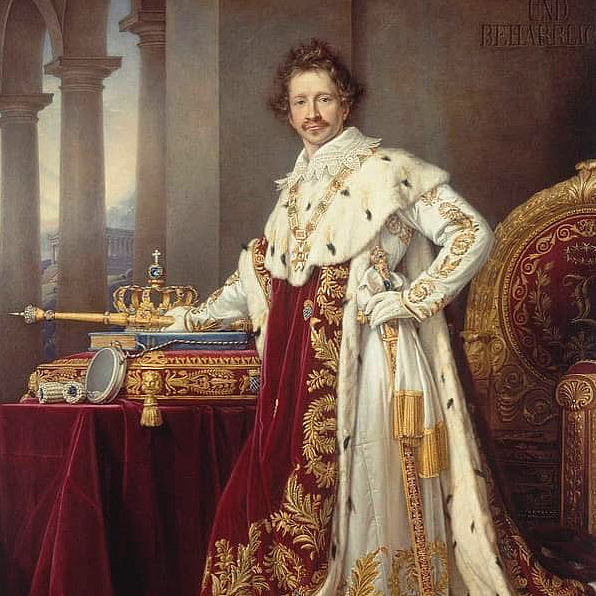
Under King Ludwig I of Bavaria (1786-1868), the Academy returns to its original status as an independent community of scholars and centre of research. Its members are released from public service. The collections are divided up again, with some of them moving to a newly created general conservatory, which is also headed by the President of the Academy until 1936. Others are merged with the university’s teaching collections.
King Ludwig I appoints Friedrich Wilhelm Schelling as Academy President.
1827
Foundation of central polytechnic institution
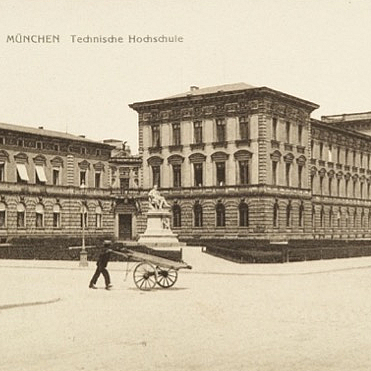
The polytechnic collection, formerly an attribute of the Academy, becomes a “central polytechnic institute”. This is a forerunner of the Technische Hochschule which would later become the Technical University of Munich (TUM) as it is known today.
1841
Limiting the Academy’s autonomy
King Ludwig I gets involved in the running of the Academy and reserves the right to appoint the President and six members of each class. This represents a major infringement on the Academy’s autonomy.
1843
Foundation of the State Palaeontology Collection
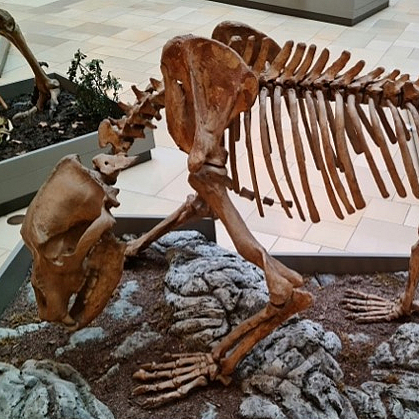
The Bavarian State Palaeontology Collection is created by merging the collections of the Academy and the university.
1848
Demand to restore the Academy’s autonomy
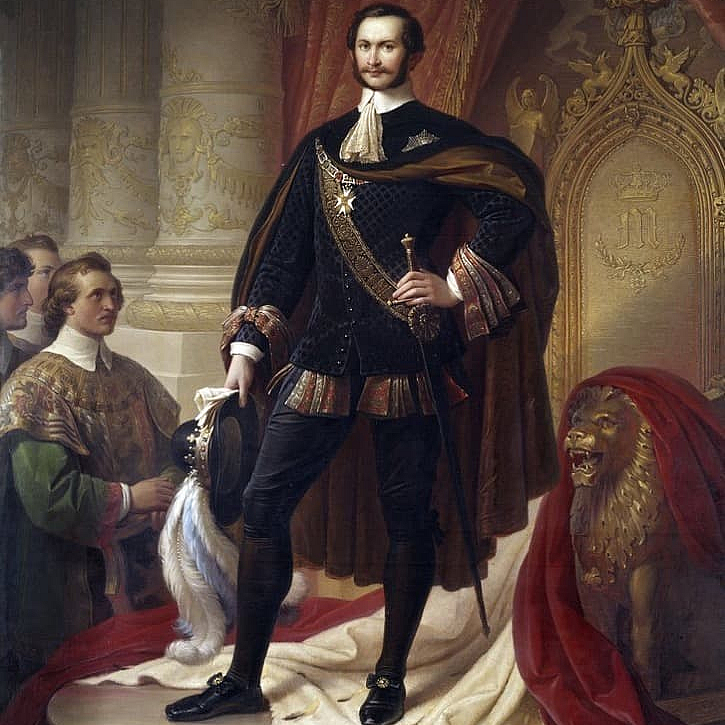
Maximilian II ascends the throne of Bavaria. The Academy and its new President Friedrich Wilhelm von Thiersch ask the king to restore the Academy’s right to manage its own administrative affairs.
1849
Restoration of full rights to appoint members
The Academy’s right to select all of its own members is restored.
1858
Foundation of Historical Commission
Maximilian II founds the Historical Commission at the Bavarian Academy of Sciences and Humanities. The Commission is still in existence today and holds a large number of important source editions.
1868
Foundation of the Commission for International Geodesy
The Bavarian Commission for International Geodesy is founded. The Prussian officer and geodesist Johann Jakob Baeyer (1794-1885) is the driving force behind this initiative. Important figures in geodesy at the time include Carl Maximilian von Bauernfeind (Academy member since 1865), mathematician Ludwig von Seidel and physicist Philipp von Jolly (1809-1884). In 1885, the Commission is expanded, becoming the international geodesy project which is still in existence today.
1892
First female honorary member
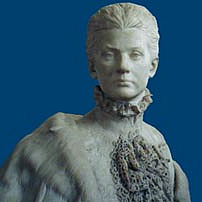
Under President Max von Pettenkofer (1890-1899), Princess Therese of Bavaria becomes the first, and to date only, woman to be appointed as an honorary member of the Academy. After several disagreements regarding the acceptance of female members in general, she is awarded membership in recognition of her research in the fields of anthropology, zoology and botany.
1893
Work begins on Thesaurus Linguae Latinae
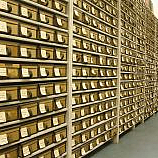
The Commission for the Publication of the Thesaurus Linguae Latinae sets in motion the Academy’s first major humanities project involving international collaboration with academies in Berlin, Göttingen, Leipzig, Munich and Vienna. The central editorial office is established at the Academy in 1899. Since 1949, it has been supported by over 30 German and international academies and institutions of scholars.
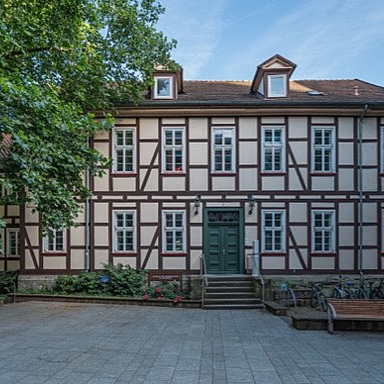
1901
First Nobel Prize winner: Wilhelm Conrad Röntgen
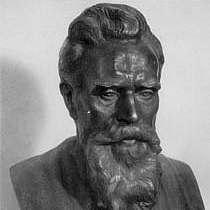
Wilhelm Conrad Röntgen, who discovered X-rays, is awarded the first Nobel Prize in Physics, thus becoming the Academy’s first Nobel laureate.
1911
Establishment of the Dictionaries Commission

The Commission for the Production of Bavarian Dictionaries and the Study of Bavarian Dialects is founded. In 1942, it was renamed as the Commission for Dialect Research and its mission is to produce a dictionary for the Bavarian, East Franconian and Rhineland-Palatinate dialects.
1911
Academy establishes the Bene Merenti medal

The Academy’s Bene Merenti medal of merit is designed by Theodor von Gosen (1873-1943), a professor at the Academy of Fine Arts in Breslau. There are two versions of the medal: a smaller gold medal and larger silver and bronze medals. The silver medal is awarded most frequently.
1912
Commission for the Collection of Soldiers’ Songs
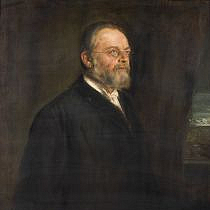
The Commission for the Collection and Editing of Soldiers’ Songs is set up under the leadership of Karl Theodor Ritter von Heigel (1904-1915). It concludes its work in 1925. The Commission for the Publication of an Encyclopaedia of Mathematical Sciences is also established and remains in existence until 1949.
1918
Name change
With the fall of the House of Wittelsbach and the creation of the Free State of Bavaria in 1918, the Academy gets a new name: the Bavarian Academy of Sciences and Humanities (BAdW).
1923
Inflation erodes Academy’s wealth
Inflation devalues almost all of the Academy’s endowed assets. This financial setback puts a stop to virtually all prize conferrals and research expeditions.
1927
Foundation of the Commission for Bavarian History

The Commission for Bavarian History is founded along with the Institute for Bavarian Ethnology by decree of the Bavarian state government.
1933
Departure of Albert Einstein
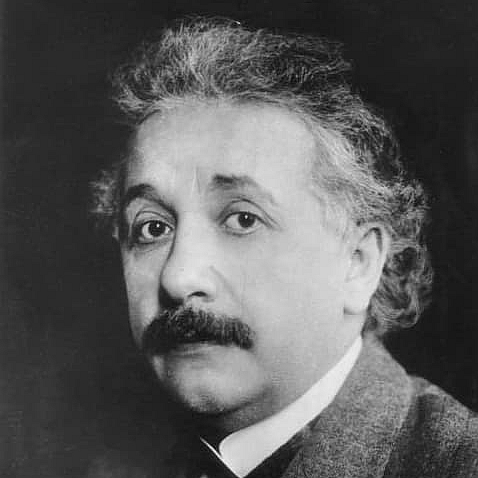
In April, Albert Einstein cancels his corresponding membership under pressure from the Academy. The minutes of the Department of Philosophy and History merely record this matter-of-fact statement: “The corresponding member of Department II, Mr Einstein, has left the Academy.”
1933
Dismissal of Jewish staff members
In compliance with the Law for the Restoration of the Professional Civil Service of 7 April 1933, the Academy and its Commissions dismiss Jewish staff members.
1936
Appointment of Karl Alexander von Müller as President
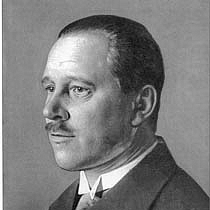
On 2 March 1936, historian Karl Alexander von Müller is appointed President by the Reich Minister for Science, Education and National Culture, Bernhard Rust.
1936
Removal of scientific collections from the Academy
The oft-discussed idea of permanently removing the scientific collections from the Academy for cost and administrative reasons is finally acted upon in 1936. Biologist Max Dingler (1883-1961), non-tenured professor of biology in Gießen and member of the Nazi Party, is appointed as acting General Director of the Bavarian Natural History Collections. In 1945, Dingler is relieved of his office. The idea of returning the collections to the Academy is considered but never carried out.
1938
Exclusion of Jewish members
Jewish members Lucian Scherman (1864-1946), Alfred Pringsheim (1850-1941), Richard Willstätter (1872-1942) and Heinrich Liebmann (1874-1939) are excluded from the Academy.
The following members left “voluntarily”:
Ordinary members: Johannes Sieveking (1869-1942), Karl Walter Brecht (1876-1950)
Corresponding members: Eduard Norden (1868-1941), Otto Hintze (1861-1941), Ernst Bernheim (1850-1942), Kurt Hensel (1861-1941), Georg Bredig (1868-1944), Medea Norsa (1876-1952).
From 1941, any “non-Aryan” corresponding members living abroad are simply struck off the lists without being informed.
The following remain members of the Academy in spite of Jewish ancestry: Max Förster, Erich von Drygalski and Rudolf Pfeiffer.
The following members who survived the war – Walter Brecht, Kazimierz Fajans and Rudolf Pfeiffer – are reinstated with full rights in 1945.
Further information will be found in the Digital Memorial.
1939
New statute of the Reich Ministry of Science
The Reich Ministry of Science, Education, and Culture announces a new statute on 12 July that significantly restricts the Academy’s right to choose its own members. Since 1936, the Academy President has not been elected but rather appointed by the Reich Minister. The new statute also abolishes the previously used ball ballot system. From 1940, new members are selected from a list.
1940
Membership based on ministerial order
In the Academy’s electoral meeting and under pressure from the Bavarian Ministry of Culture and Education, six candidates are elected who have not been proposed by the two classes: Walther Wüst, who had previously been rejected in the electoral meeting of the philosophy and history class, Lutz Pistor (vice-chancellor of the Technische Hochschule university), philologist Franz Dirlmeier, botanists Friedrich Boas and Friedrich von Faber and physicist Rudolf Tomaschek.
The minutes of the general meeting held on 1 June state that the Academy agrees to “comply with the wishes of the state minister” and to “use the supplementary list to select members en masse across the entire Academy without assessing scientific merit on an individual basis”.
1944
Election of Mariano San Nicoló
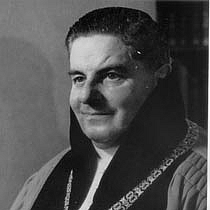
Mariano San Nicoló is elected President on 26 November.
1944
Old Academy building destroyed

The Academy building on Neuhauser Straße in Munich is completely destroyed during a night-time bombing raid on the night of 23 April 1944. All work at the Academy comes to a complete halt.
1945
Departure of Karl Alexander von Müller
Pre-empting his expulsion following an internal investigation initiated by the Academy, Karl Alexander von Müller resigns “voluntarily” from the Academy on 23 September. Müller resigns from his position as secretary of the Historical Commission at the Bavarian Academy of Sciences and Humanities in December 1945. Six months later, he also steps down from the Commission.
1946
Scientific activities are resumed
On 25 July, the military government unconditionally allows the Academy and some of its Commissions to resume their scientific activities.
1946
Temporary home in Schwabing
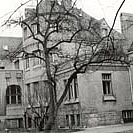
After denazification, the Academy moves into a temporary home on Maria-Josepha-Straße 11 in Munich under the Presidency of Walther Meißner. A shortage of paper poses a major obstacle to research work.
1946
Commission for Low Temperature Research
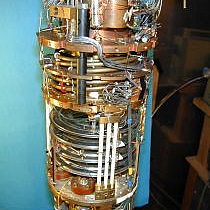
The Commission for Low Temperature Research is founded at the suggestion of Academy members Klaus Clusius (1903-1963), professor of physical chemistry at Ludwig-Maximilians-Universität München (LMU), and Walther Meißner (1882-1974), professor of technical physics at Technische Hochschule in Munich and President of the Academy from 1946 to 1950. The Commission runs the Walther-Meißner-Institute for Low Temperature Research.
1946
First annual meeting after Second World War
The first annual meeting after the Second World War takes place in the auditorium of the Brunnenhof Theatre.
1949
Removal of collections
By 1955, the prehistoric collection, the Egyptian collection and the coin collection have been removed from the Academy along with the Museum for Ethnology and the Museum for Casts of Classical Statues. The natural sciences collections are placed under the general management of the Bavarian State Natural Science Collections.
1950
Foundation of Society of Friends

The new Society of Friends of the Bavarian Academy of Sciences and Humanities is founded to improve the Academy’s strained financial situation and to help it source at least some of the funds it needs to carry out its many different activities.
1959
Public corporation status acquired
The Bavarian State Minister for Education and the Arts, Prof. Dr. Theodor Maunz, awards the Academy the status of a corporation under public law on its 200th anniversary.
1959
Relocation to Residenz royal palace
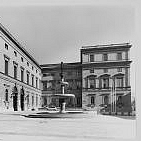
On its 200th anniversary, the Academy moves into its new home in the north-east wing of Munich’s Residenz royal palace, which was designed by architect Leo von Klenze. The Academy now has 135 offices and rooms, a library, two meeting rooms and an imposing plenary hall.
1959
Introduction of gowns
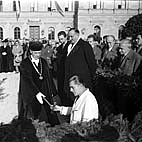
The members of the Academy start wearing the gowns that are still worn today.
1962
Foundation of the Commission for Glaciology

The Commission for Glaciology (the present-day “Geodesy and Glaciology” project) is founded. It is involved in research in the Alps and takes part in expeditions. The research work is focused on the Vernagtferner glacier in the Ötztal Alps. Here, the Commission operates the Vernagtbach monitoring station – the highest discharge station in the Eastern Alps at an altitude of 2,640 m.
1962
Foundation of the Commission for Electronic Computing
Academy members Hans Piloty and Robert Sauer set up the Commission for Electronic Computing. With support from the Free State of Bavaria, they create a shared computing centre for research and teaching open to all Munich-based universities. Today, the organisation is known as the Leibniz Supercomputing Centre and is located on Richard-Wagner-Straße 18.
1967
WMI moves to Garching
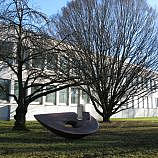
The Walther-Meißner-Institute moves into a new building in Garching.
1970
New home and new IT training role for LRZ
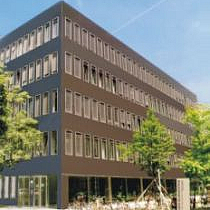
The Leibniz Supercomputing Centre (LRZ) moves into a new building on Barer Straße 21 and takes on the role of IT training provider at the Technical University of Munich.
1974
Visit of the Dalai Lama
The Dalai Lama visits the Academy, mainly to see the work being carried out by the Commission for Central Asian Studies, which is compiling a dictionary of the Tibetan written language.
1975
First post-War meeting of the UAI in Germany
The first post-War meeting of the Union Académique Internationale in Germany takes place at the Academy.
1979
New basis for long-term project funding
A new basis for the funding of long-term humanities projects at the Academy is created with the Academies Programme, a joint initiative of the federal and state governments.
1984
Foundation of the Commission for the Exploration of Ancient Urbanity
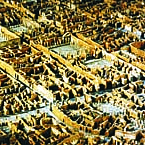
The Commission for the Exploration of Ancient Urbanism is set up to carry out archaeological research on urban culture in Greek and Roman antiquity.
1984
225th anniversary of the Academy
On 8 December, the Academy celebrates its 225th anniversary with special guests the German President Richard von Weizsäcker and the Bavarian Minister-President, Franz Josef Strauß.
1986
Foundation of the Commission for Ecology
The Commission for Ecology is set up by request of the Bavarian State Ministry for Regional Development and the Environment. It is tasked with addressing current environmental issues or those likely to become a future trend and discussing these with groups of experts.
2003
Establishment of Technology Forum

The Academy establishes the Technology Forum, a standing committee for engineering and applied natural science disciplines. The Forum organises public information and discussion forums on issues of scientific and general interest.
2006
LRZ moves to new home in Garching

The Leibniz Supercomputing Centre (LRZ) moves to a new building at the Garching research campus. The former building on Barer Straße did not provide enough space in the short term or any scope for expansion in the medium term.
2009
250th anniversary
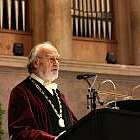
In 2009, the Academy celebrates its 250th anniversary with a wide range of events, publications, exhibitions and ceremonies.
2010
Establishment of the Young Academy
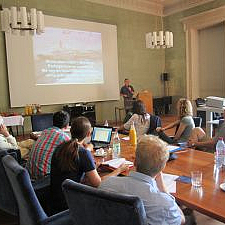
The Young Academy is founded to support highly talented young scientists in Bavaria.
2012
The Centre for Virtual Reality and Visualisation is opened at LRZ

The Centre for Virtual Reality and Visualisation at LRZ is set up to enable the creation of 3D models of architectural plans or visual representations of movements in the interior of the earth.
2014
Foundation of the Munich Historical Sciences Cluster of Excellence
The Munich Historical Sciences Cluster of Excellence is founded. This multilateral collaboration of Munich-based historical research institutes seeks to put the study of history in Munich on a stronger footing.
2015
Phase 2 of SuperMUC gets underway

Phase 2 of the SuperMUC supercomputer project gets underway at the LRZ. The existing 155,000 cores are supplemented by 86,016 cores in 6,144 processors based on the latest Intel technology with Intel Xeon E5-2697 v3. This adds a further 3.6 petaflops to the existing theoretical maximum computing performance of 3.2 petaflops.
2015
Structural reform

In 2015, the Academy completes one of the most forward-looking reorganisations in its history, reforming both structure and working methods. The new statute underlines the important role of basic research and establishes flexible formats to address and discuss current trends and promote the next generation of researchers.
2015
Foundation of the MCIR

The Academy launches the Munich Center for Internet Research (MCIR) to carry out scientific research into the social changes caused by the internet and digitalisation. In 2018, the MCIR is incorporated into the Bavarian Research Institute for Digital Transformation (bidt).
2017
Bavarian Dictionary goes online
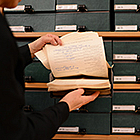
From card file to the world wide web: the Bavarian Dictionary goes online. A wide range of digital tools on the new homepage allows browsers and researchers from all over the world to search the extensive material collection of the Bavarian Dictionary.
2018
Foundation of the bidt
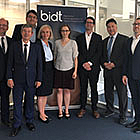
The Academy launches the Bavarian Research Institute for Digital Transformation (bidt) with the aim of obtaining a deeper understanding of the digital transformation. Its mission is to consolidate and drive progress on the current issues and debate through interdisciplinary collaboration.
2019
Thesaurus Linguae Latinae goes online

The Thesaurus Linguae Latinae becomes available online. All previously published volumes can be consulted for free through open access. Volumes A-M and O-P of the thesaurus are now available online – the equivalent of around 80,000 A4 pages. The 228-page index of cited authors and sources is also accessible online. The Academy timed the launch for the 125th anniversary of the thesaurus project.
2020
Completion of the Max Weber Complete Edition
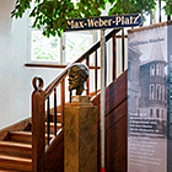
On 14 June 2020, the Bavarian Academy of Sciences and Humanities publish Max Weber’s notes on his lecture on practical national economics. This is the 47th and final volume of the Max Weber Complete Edition. The project began in the analog age and ends in the digital age, with the publication of the final volume of the Complete Edition marking the start of work on the digital version. As part of its Max Weber commemorations in 2020, the Academy organises the exhibition “Bourgeois world and material world: Max Weber’s Munich” at the Seidlvilla in Munich (photo).
2020
Cornerstone for Munich Quantum Valley (MQV)

Bavaria takes a quantum leap. Minister-President Markus Söder announces in autumn 2020 that the Bavarian government is investing approximately 120 million euros in quantum science and technologies over a two-year period. An alliance of non-university research institutes with cooperation from the Academy seeks to establish a Munich centre for quantum research, thus providing the Bavarian region with new scientific and economic opportunities in this field of innovation.
2021
Second Bavarian glacier report

A new report on the status of glaciers signals that they are melting faster than ever before. The Bavarian glaciers are being particularly impacted by climate change, as evidenced by the second Bavarian glacier report, “Climate change in the Alps”.
2021
Foundation of the Schelling Forum
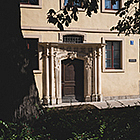
Seeking to encourage lively academic discussion, the Academy establishes the Friedrich-Wilhelm-Joseph-Schelling-Forum in cooperation with Julius-Maximilians-Universität Würzburg. Both institutes agree to develop their existing interdisciplinary cooperation and create a space for lively academic discussion.
2022
Foundation of Munich Quantum Valley
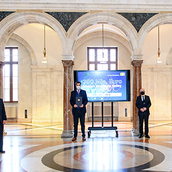
Munich Quantum Valley finally gets the green light with the ceremonial signing of its foundation charter at the Bavarian Academy of Sciences and Humanities. In addition to funding from Hightech Agenda Bayern in the amount of 300 million euros, members of the initiative have already secured over 80 million euros in federal funding.
2022
60th anniversary of LRZ
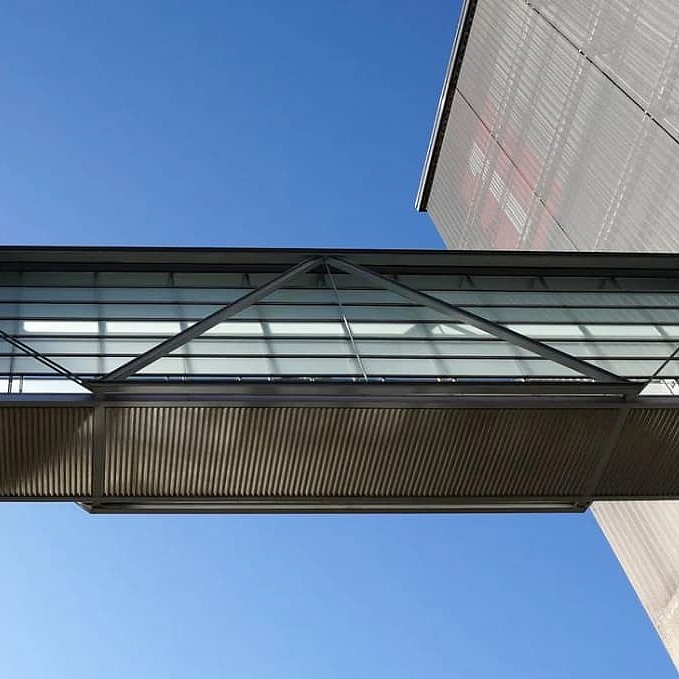
IT has come a long way: The LRZ turns 60. In its ongoing dialogue with science and research, the Leibniz Supercomputing Centre (LRZ) of the Bavarian Academy of Sciences and Humanities has actively shaped IT developments in Germany – but also in Europe and worldwide – over the past 60 years, and is still writing technology history today.
2022
Southern Schneeferner loses glacier status

Glacier loss: Southern Schneeferner loses glacier status. Summer 2022 leaves very visible impacts on the glaciers of Bavaria, including a significant further loss of ice on the Southern Schneeferner. New georadar measurements from mid-September 2022 prove the extent of the loss.
2023
AI in medicine

A new ad hoc working group is established at the Bavarian Academy of Sciences and Humanities to focus on artificial intelligence in medicine. The three-year project is a collaboration between the Academy and Helmholtz Munich. With some renowned scientists from a wide range of disciplines on board, the working group seeks to analyse the risks and opportunities of using artificial intelligence (AI) in medicine. As a central point of contact for political decision-makers, the working group proactively addresses emerging questions regarding AI in medicine.
2023
New project on German-Jewish sepulchral culture
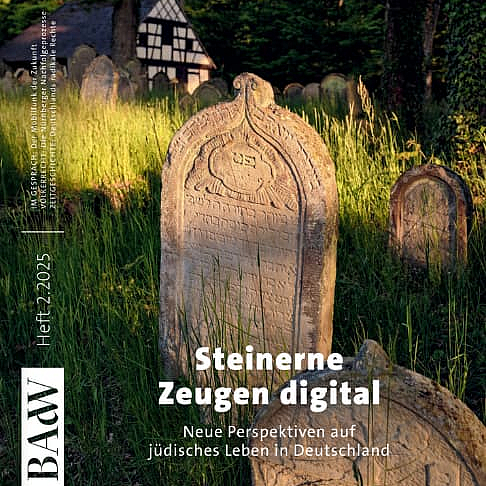
The 2,400 or so Jewish cemeteries in Germany are among the country’s oldest sepulchral monuments. They are important historical, literary and material expressions of Jewish culture. The state academies of Bavaria and North Rhine-Westphalia along with satellite offices at the Universities of Duisburg-Essen and Bamberg initiate a joint project to document and study these important monuments, and also to prevent them from deterioration.
2024
Cooperation to set new standards in quantum technology
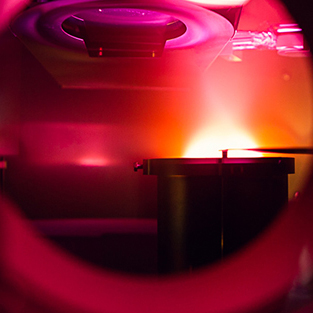
Joint development of superconducting quantum processors and quantum circuits: Green light for collaboration between semiconductor lab of the Max Planck Society, the Technical University of Munich and the Walther-Meißner-Institute of the Bavarian Academy of Sciences and Humanities as part of Munich Quantum Valley.
2025
First conferral of Academy’s Pioneer Award

In 2025, Bavaria celebrates ground-breaking research and pioneering innovations with the High-Tech Prizes for 2025. The Academy’s Pioneer Award is conferred for the first time at the award ceremony. Endowed with 300,000 euros, this international prize recognises researchers for their outstanding achievements in the field of technology with major benefits for society.
2025
World’s first photonic AI processor from Q.ANT becomes operational at LRZ

Q.ANT delivers its native processing server (NPS) to the Leibniz Supercomputing Centre. This marks the world’s first commissioning of a photonic co-processor in a high-performance computing environment (HPC). The cutting-edge implementation allows the LRZ to evaluate photonic acceleration for artificial intelligence (AI) and simulations. This paves the way for significantly higher computing performance with much lower energy consumption.